Termites cause billions of rands in structural damage across South Africa every year — often before homeowners even realise there's a problem. The treatment approach depends entirely on which species you're dealing with. Misidentifying termites is one of the most costly mistakes property owners make.
Why Termite Identification Matters
Subterranean and drywood termites live differently, eat differently, and require completely different treatment methods. Applying the wrong treatment won't just fail — it can give termites more time to cause irreversible structural damage. A professional inspection is the only reliable way to identify the species and extent of infestation.
Subterranean Termites
Subterranean termites are the most destructive termite group in South Africa. They live underground in large colonies — sometimes numbering in the millions — and build mud tubes to travel between their nest and food sources above ground.
Key characteristics
- Require contact with soil moisture to survive
- Build distinctive mud tubes on foundations, walls, and wooden structures
- Swarmers (alates) typically emerge after summer rains
- Workers are creamy-white and avoid light
- Can enter buildings through cracks as thin as 0.5 mm
Common species in SA
Microtermes and Odontotermes are widespread across Gauteng, KwaZulu-Natal, and the Western Cape. They attack structural timber, door frames, roof trusses, and even furniture.
Treatment methods
- Soil barrier treatments (termiticide application around foundations)
- Baiting systems placed in the ground around the property
- Direct treatment of active mud tubes and entry points
- Pre-construction soil treatment for new builds
Drywood Termites
Drywood termites live entirely within the wood they consume. They don't need soil contact and don't build mud tubes. This makes them harder to detect and allows them to infest upper floors, attics, and furniture.
Key characteristics
- Colonies are smaller (hundreds to a few thousand individuals)
- Produce small, hard pellet-like frass (faecal droppings) that pile up below infested wood
- No mud tubes — they live inside dry, sound timber
- Often found in imported furniture, wooden crates, and roof timbers
- Swarmers are attracted to light and may be found near windows
Treatment methods
- Localized wood injection with termiticide
- Removal and replacement of heavily infested timber
- Whole-structure fumigation for severe infestations
- Heat treatment for furniture and smaller items
Warning Signs of Termite Activity
- Hollow-sounding timber when tapped
- Mud tubes on exterior walls or foundations
- Small piles of wood-coloured pellets (frass)
- Discarded wings near windows or light sources
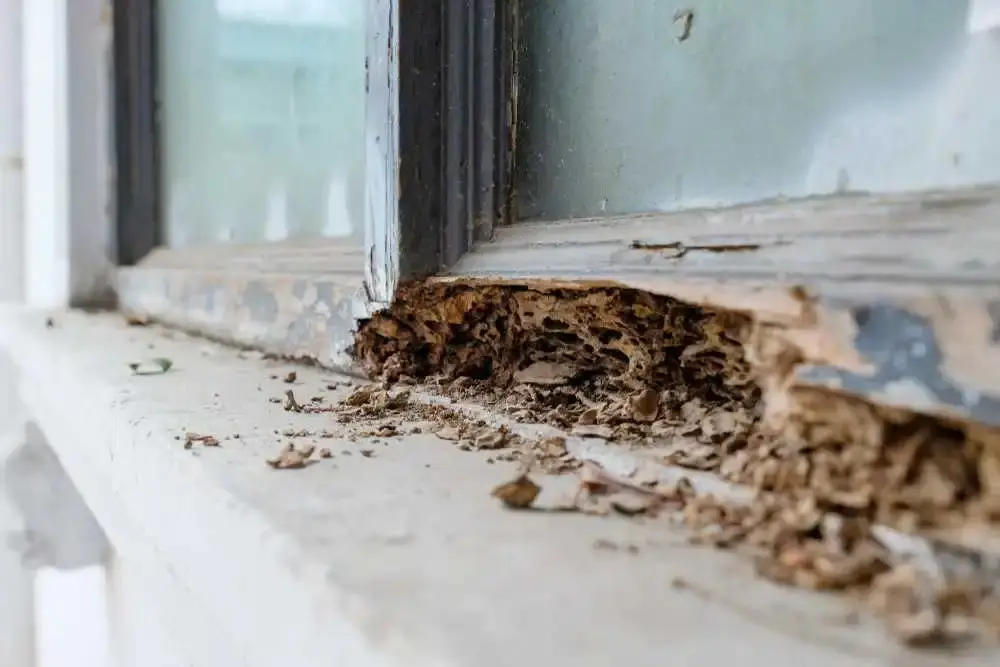
- Bubbling or uneven paint on wooden surfaces
- Sagging floors, doors that stick, or cracked plaster
- Visible tunnels in exposed wood grain
Protecting Your Property
Annual termite inspections are strongly recommended for all South African properties — especially homes with wooden roof trusses, which are standard in many SA suburbs. Pre-purchase inspections are essential when buying property, as termite damage is often excluded from standard home insurance policies.
Aplus Pest Control offers comprehensive termite inspections with detailed reports suitable for property transactions, as well as soil treatments, baiting programmes, and wood preservation treatments backed by our service guarantee.